

The Evolution of At-Home Pain Management in 2026
Why Passive Stretching Isn't Enough: The Case for Active Recovery Devices in 2026
Stop the cycle of chronic pain. Discover why clinic-grade massage devices outperform passive stretching for lasting neck and shoulder relief in 2026.
The Evolution of At-Home Pain Management in 2026

Stiffness that once appeared after a long week now emerges by 10 a.m. Shoulders creep toward the ears, the base of the skull tightens, and the familiar head-roll-and-shrug routine buys about ninety seconds of relief before the tension settles back in. That cycle — stretch, release, re-tighten — is the defining frustration of the hybrid-work decade, and it is the clearest sign that a muscle problem has become a chronic one.
Passive stretching lengthens tissue temporarily; it does not change the resting tone of a muscle that has spent years holding a protective posture. Deep trigger points in the trapezius and the cervical extensors sit beneath layers that voluntary stretching barely reaches. Mobilizing them requires external mechanical input — kneading, compression, rapid pulses — the same inputs a therapist supplies by hand.
This is where the equipment story changed. Research on active therapy protocols found participants observed a significant mean pain reduction from baseline compared to placebo, at 2.61 points, and electric massage chair protocols reduced muscle tone by 12%. Those are measurable physiological shifts, not subjective comfort.
The practical distinction for buyers: relaxation massagers feel pleasant, therapeutic devices change tissue behavior. Only the second category belongs in a chronic neck pain recovery plan.
Why Shiatsu Mechanisms Are Essential for Chronic Tension

A shiatsu neck and back massager for pain relief operates on a principle that vibration cannot replicate: rotating nodes travel in opposing circular paths, pinching and releasing tissue between them. That motion mimics the kneading a manual therapist applies with thumbs and knuckles — sustained compression that lifts fascia away from underlying muscle rather than simply shaking it. For a knot that has been building for months, compression is what breaks the holding pattern.
Heat is as important as the mechanics. Warming the tissue around the cervical spine before and during kneading increases local blood flow, which makes muscle fibers more compliant and the compression less painful to tolerate at useful depth.
Shiatsu units are built around the shoulder girdle, and the muscles they reach best are precisely the ones desk posture overloads:
-
Upper trapezius — the shelf of muscle between neck and shoulder that absorbs monitor-height errors
-
Levator scapulae — the strap running from the cervical vertebrae to the shoulder blade, the usual source of one-sided neck stiffness
-
Rhomboids — between the spine and scapula, chronically lengthened by forward rounding
-
Suboccipitals — the small muscles at the skull base responsible for tension headaches
Tip: Start on heat with the lowest intensity for the first three minutes. Cold, guarded muscle resists deep nodes and the session ends early.
Percussive Therapy: The Best Massage Gun for Neck and Shoulders
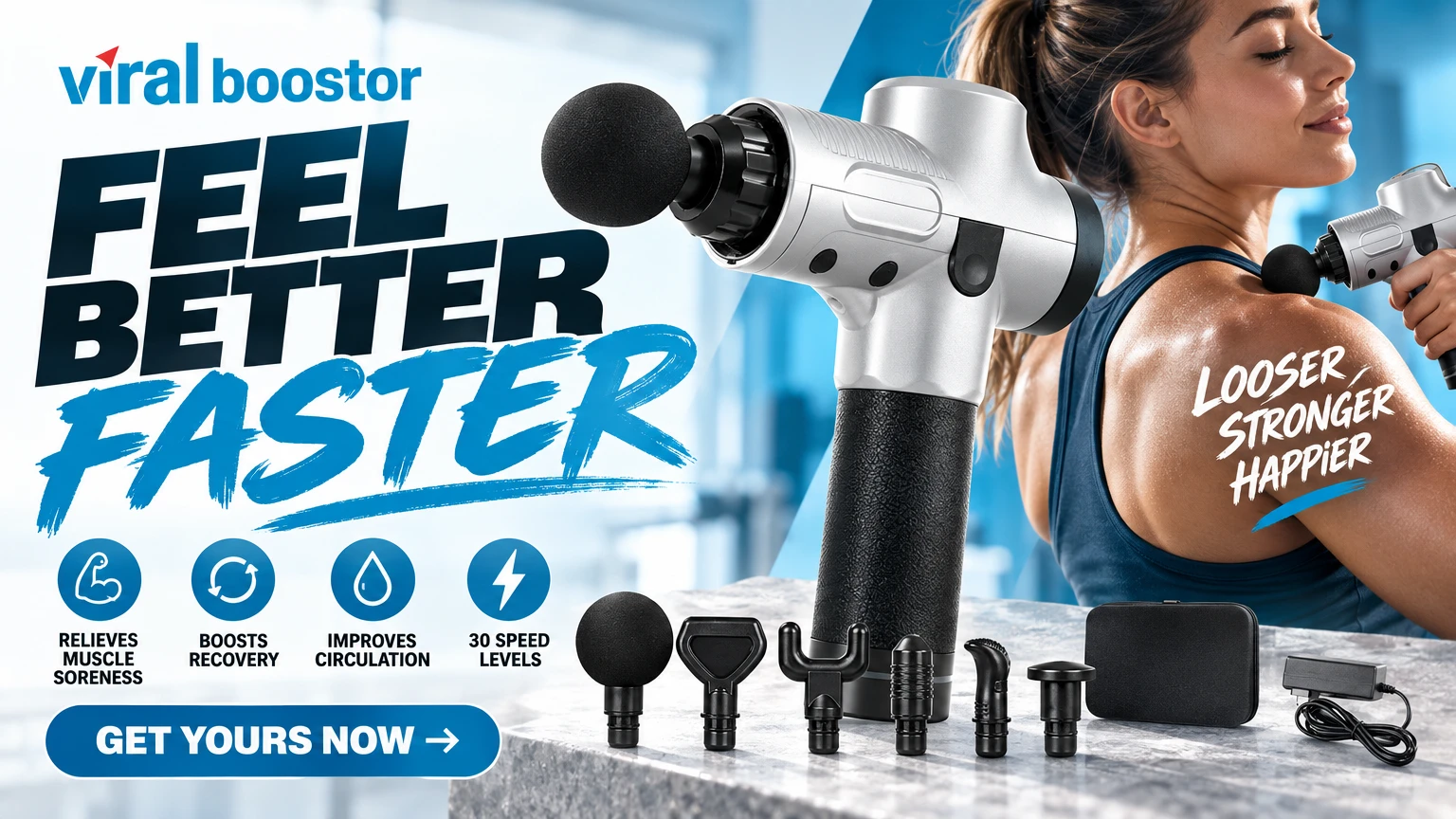
Percussion and vibration are frequently sold as the same thing. They are not. Vibration oscillates across the surface and primarily affects skin and superficial fascia. Percussion drives a head in and out along a measurable stroke length, delivering a true compression cycle into the muscle belly. For dense shoulder tissue, that depth is the entire point.
Two specifications decide whether a unit is appropriate near the neck. Stroke length — the distance the head travels — should sit on the shorter end for cervical work; long-stroke units built for quads are too aggressive above the shoulder line. Stall force, the pressure the motor tolerates before the head stops, needs to be moderate and controllable rather than maximal. The best massage gun for neck and shoulders is the one you can modulate, not the one with the highest numbers.
Rapid pulses also have neurological effects. Repeated stimulation floods the area with sensory input, which raises the threshold at which the region reports pain, loosening the guarding reflex that keeps tension locked in.
Safety checklist: avoid the front and sides of the throat entirely, never target the carotid artery, keep the head off the spinous processes and collarbone, and stop at any numbness or tingling. Use the flat or fork attachment for the neck and upper traps; reserve bullet heads for broad shoulder muscle, never bone.
The Science of Muscle Tone Reduction
Muscle hypertonicity — resting tension in a muscle that should be idle — is what makes chronic neck pain feel permanent. The muscle never fully switches off, so it accumulates metabolic waste, restricts local circulation, and keeps sending pain signals that reinforce the guarding. Automated massage interrupts this loop mechanically. Repeated compression and release pump fluid through the tissue while the rhythmic sensory input encourages a parasympathetic shift, lowering the nervous system's baseline instruction to stay braced.
This is where the measured evidence is most useful. Electric massage chair protocols reduced muscle tone by 12% — a quantified drop in resting tension, captured by instrumentation rather than self-report.
The significance of that figure lies in its repeatability. A manual therapist delivers skilled, variable intervention for an hour, then you wait a week. An electric protocol delivers the same stimulus at the same intensity for 15 minutes, daily, which is what actually moves a chronic baseline. Consistency, not session length, is the variable most chronic pain sufferers have been missing.
Think of it as a declining line: resting tone measured at day one, then tracked downward across weeks of short daily sessions, flattening into a new, lower normal — rather than the sawtooth spike-and-rebound of occasional appointments.
Choosing Your Device: Portability vs. Power
Form factor should follow your pain pattern, not the marketing. Here is how the main categories of clinic-grade massage devices sort out:
Device Type |
Best For |
Key Benefit |
|---|---|---|
Compression-type stiffness, nerve-referred tingling |
Gentle cervical decompression |
|
Desk workers with all-day trapezius tension |
Hands-free kneading plus heat |
|
Athletes, post-workout shoulder soreness |
Targeted depth and control |
|
Commuters, frequent flyers |
Maintains routine away from home |
Traction collars and neck stretchers
These create space rather than apply pressure, easing the cervical spine into gentle extension. They suit people whose discomfort feels like crowding or pinching, and they pair well with kneading devices rather than replacing them.
Wearable shiatsu wrap
The strongest option for daily, sustained tension. They sit on the shoulders while you work, which solves the real obstacle to consistency — nobody schedules a massage break mid-deadline.
Handheld percussive tools
Built for precision and post-exercise recovery. They demand active use and good technique, which makes them excellent for fitness users and less practical for someone who wants relief while answering email.
The Bottom Line: What You Need to Know
For readers who want the argument compressed into decisions they can act on today:
-
Active therapy beats passive stretching for chronic pain. Shiatsu kneading and percussive compression apply external mechanical force to deep tissue; stretching relies on voluntary effort that rarely reaches the trigger points driving persistent neck and shoulder tension.
-
Prioritize heat and adjustable intensity over maximum power. Warmed tissue tolerates deeper work, and variable intensity lets a single device serve both an acute flare-up and a maintenance session — the two things a clinical therapist adjusts by feel.
-
Ten to fifteen minutes daily outperforms one long weekly session. Resting muscle tone responds to repeated stimulus, not to occasional intensity. A short daily routine is what shifts a chronic baseline rather than temporarily masking it.
-
Treat the back and sides, never the front of the neck or the spine itself. Keep percussive heads off bony prominences, avoid the throat and carotid area entirely, and stop at numbness, dizziness or sharp pain.
Effective at-home pain relief 2026 is a protocol, not a purchase — the right device matters, but the daily repetition is what changes how your shoulders feel in six weeks.
One note on scope: these tools manage muscular tension. They do not correct structural spinal problems, and anyone with a recent injury, a post-surgical neck, nerve symptoms down the arm, or an undiagnosed condition should get clearance from a clinician before starting.
Bringing Clinic-Grade Relief to Your Doorstep
Nobody with chronic shoulder tension wants another ninety-second fix. What most people want is to stop organizing their week around an appointment they can barely afford and rarely get soon enough — to have the mechanism that actually works sitting in the living room instead of across town.
That is the reasoning behind how Viral Boostor builds its recovery range. Devices are selected for therapeutic mechanics rather than novelty: kneading nodes with genuine depth, heat that reaches tissue instead of warming plastic, percussive units with controllable intensity suited to the cervical region. The filter is simple — does this replicate what a therapist's hands do, consistently, every day, without supervision?
The arithmetic is straightforward. A single device is a one-time cost against a recurring appointment schedule, with no booking windows, no travel, and no waiting for a slot that fits around work. Relief is available whenever it's needed, even on a Tuesday evening.
Explore the Viral Boostor recovery collection to find the shiatsu, percussive, and traction tools that fit your pain profile — and start treating chronic tension as something you manage daily, on your own terms, rather than something you endure between appointments.